
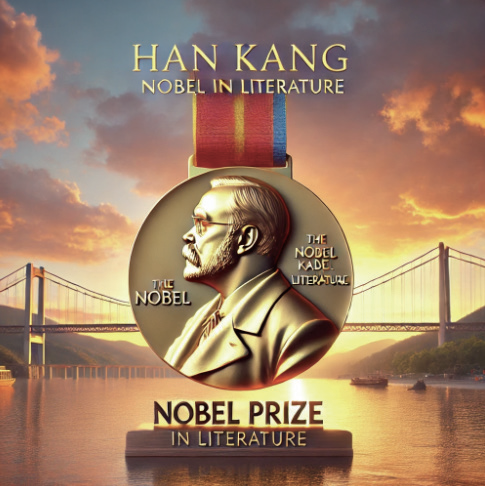
Han Kang Wins the 2024 Nobel Prize in Literature
“The Nobel Prize in Literature 2024 is awarded to the South Korean author Han Kang, for her intense poetic prose that confronts historical traumas and exposes the fragility of human life.”
— The Swedish Academy
On October 10, 2024, the Swedish Academy announced that Korean novelist Han Kang was awarded the Nobel Prize in Literature, making her the first Korean and the first Asian woman to receive this honor.
Author: From Poetry to Novels
Han Kang made her debut in 1993 with poetry published in the literary magazine Literature and Society. The following year, her short story Red Anchor won the Seoul Shinmun’s Literature Contest. In 2016, Han Kang became the first Korean writer to win the Man Booker International Prize for The Vegetarian. Now, with her recent Nobel Prize in Literature, her works are set to reach even more readers worldwide. Below are some of her most renowned books:
Human Acts
This novel is based on the Gwangju Uprising of the 1980s, the democratic movement against dictatorial rule. It depicts the brutal massacres carried out by the military government. By recounting the stories of those involved in the uprising, including real individuals, Han Kang invites readers to bear witness to their pain and emphasizes the importance of remembering history.
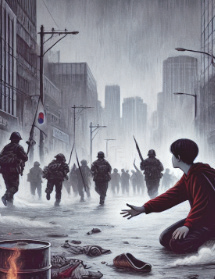
We Do Not Part
The Jeju 4·3 incident refers to a series of events that began with the police firing on March 1, 1947, followed by the armed uprisings of Jeju South Korea Labor Party Guerrillas against the oppression of the Seobuk Young Men’s Association on April 3, 1948, continuing until the complete lifting of the access restrictions on Mount Hallasan on September 21, 1954. The novel is set decades later. Kyung-ha, the main character, visits Jeju at the request of her friend In-seon and confronts this historical trauma. Through this work, Han Kang explores the meaning of living without a true farewell to that day.
The Vegetarian
Some accepted social norms are akin to violence. After a series of bizarre nightmares involving animal slaughter, Yeong-hye refuses to eat meat. This profound novel invites readers to enter the inner world of a person who has been made ill by imposed societal conventions.

Features: Poetic Style, Unique Narrative Structure & Symbolism of Dreams
Han Kang’s prose often reads like poetry, making her novels not only accessible but also deeply lyrical. Her words are both delicate and direct, evoking intense emotions in readers.
Her works also feature distinctive narrative structures. In The Vegetarian, the story revolves around Yeong-hye, yet her perspective is never directly presented. The novel is intentionally structured this way, allowing readers to view Yeong-hye from an outsider’s point of view, fully immersing themselves in the narrative while emphasizing her isolation. Additionally, Han Kang frequently employs dreams as a powerful symbol. Her characters often confront their trauma in dreams, making them an effective medium for expressing experiences too difficult to articulate in reality. As a result, dreams heighten the reader’s empathy, drawing them into the characters’ pain in an almost surreal way.
After Winning: The Surge in Demand for Han Kang’s Books
Following the announcement of Han Kang’s Nobel Prize, demand for her books has surged. Bookstores across the country experienced an overwhelming spike in interest, with online orders skyrocketing and printing presses working tirelessly to keep up. Books that had been tucked away in storage were quickly moved to store entrances.
The craze has even spread to secondhand bookstores. Crowds throng Busan’s
secondhand bookstores ally, where many of Han Kang’s books are displayed prominently. Who would have expected these once-quiet shop would become bustling gathering places? Even now this joyful commotion continues, filling spaces once characterized by silence.
Literature: A Connection Between People
Throughout history, violence has often been used against those with differing beliefs. To prevent such tragedies from recurring, we must turn to literature. Books tell the stories of humanity, allowing us to meet people we might never have encountered otherwise. If you don’t open a book, you won’t meet them—but that doesn’t mean they don’t exist.
Many readers have met someone for the first time in Han Kang’s books. Now, more than ever, her works ensure that the pain of those she writes about will not be forgotten. A book can be removed from a shelf, but the voices it carries cannot be erased from our memories.
Han Kang’s writing connects readers to the suffering of others, bridging the gaps between violence, pain, and humanity. As she asked in her Nobel acceptance speech, “Can the dead save the living?”—perhaps the answer lies in the way literature continues to connect us all. The future of Korean literature, illuminated by these connections, holds boundless possibilities.