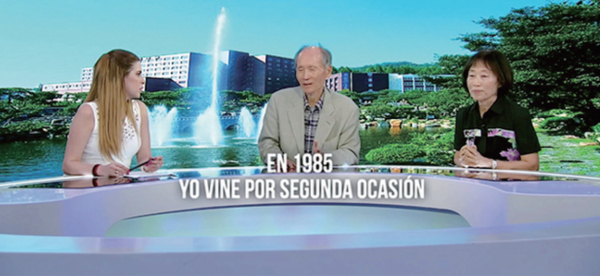
Publication of her third poetry collection The Day, the Flower: Verse Diary 3 With over 20 years of volunteer service as Vice President and Advisor of the Korean Red Cross, and as the leader of an educational institution specializing in training experts on North Korean issues.
The following is an interview of Kim Sun Hyang, Chairperson of the University of North Korean Studies, excerpted and translated for the Kyungnam Times from an article written by Editor-in-Chief Kim Jong-min that originally appeared in the January 2025 issue of the Monthly Gyeongnam.
Kim Sun Hyang recently published her third poetry collection, The Day, the Flower: Verse Diary 3, where she harmoniously weaves the aesthetics of "blooming" and "vanishing" through lyrical language and everyday expressions. Using images of vibrant flowers in full bloom and the familiar paths she walks daily that change with the seasons, the poet captures the joy of "blooming." At the same time, she conveys the sorrow of "vanishing," portraying the inevitable separation from loved ones and the wistful descent of the sun beyond the horizon, evoking a deep sense of longing.
In this special New Year’s edition of Monthly Gyeongnam, the readers will have the opportunity to meet Kim Sun Hyang as a poet, dedicated Red Cross volunteer, and an educator training experts in North Korean affairs.
Q1 All three collections of your poetry share the common theme of Verse Diary. Can you tell us about the contents of each collection?
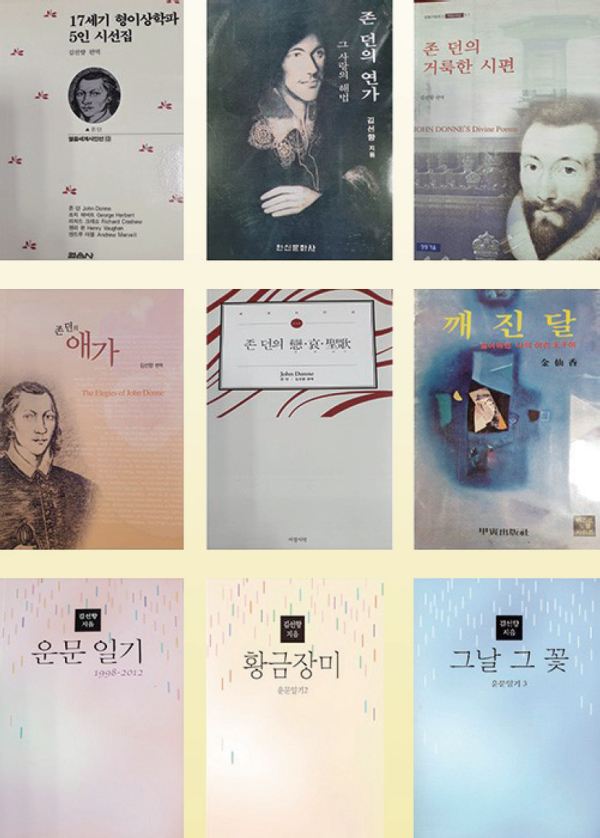
Each of the three poetry collections began as a diary—an attempt to preserve and remember special moments from everyday life. I felt that poetry, rather than prose, was a better medium for keeping and expressing these memories. Through my collections, I sought to capture through poetry the fleeting moments of life, much like preserving them in photographs, holding onto what I wished not to forget.
My first poetry collection, titled Verse Diary, spans 14 years, from 1998 to 2012. After my beloved father passed away at an early age, my mother showered me with love, as if I were her entire world, and dedicated over two decades to caring for our family and home. When she, too, left this world, I found myself longing for my parents and wanting to leave behind traces of my own life. Verse Diary: 1998~2012 encapsulates my life—memories of my family, extraordinary individuals I encountered, colleagues I worked with, and my serendipitous meetings and reflections on life.
My second collection, Golden Rose: Verse Diary 2, was published in 2021. It reflects my journey from childhood to studying abroad in the United States, becoming an English literature professor, and meeting people from all corners of the world. It candidly recounts cherished memories, everyday experiences, and my heartfelt efforts to spread warmth and kindness as Vice President of the Korean Red Cross. It also includes personal stories of my family and musings on the simple yet profound moments that shape daily life.
My third collection, The Day, the Flower: Verse Diary 3, is an effort to hold onto
what is fading. It embraces the power of memory—capturing the vitality of life through blooming flowers and beautiful music, the transient beauty of a sunset over the ocean or petals gently drifting to the ground, and the struggle against harsh winds that disrupt my daily walks, as if they were a part of me. Through these elements, I sought to explore the aesthetics of blooming, vanishing, and enduring.
Q2 How does this third collection connect to or differ from the first two?
As I studied literature and published poetry collections, I came to deeply appreciate the beauty of language. While music, visual arts, and other forms of artistic expression each hold their own unique charm, I believe that language—ranging from everyday speech to poetic expression—is unparalleled as a medium of communication. There are moments when ordinary conversations sound like poetry, and that realization led me to the idea that even a diary could be written in verse. This is the common thread that runs through all three volumes of Verse Diary.
The key difference in this third collection lies in the passage of time. It reflects the transition from middle age to old age, from youth to the later years of life. Time passes swiftly, and as the days ahead grow shorter than those already lived, I have come to believe that dedicating oneself to something unchanging—something that brings daily joy—is essential. To love people, I feel, is to love life itself.
Q3 What inspired you to write poetry?
My academic background is in English literature, specifically English poetry, so I naturally found myself immersed in poetry. The joy of reading poetry eventually awakened in me a desire to write my own, and I began practicing. However, I soon realized that writing poetry was not as easy as I had imagined. The moments when words naturally transformed into poetry were rarer than I had hoped.
Still, I enjoyed writing poetry and I wanted to preserve those moments dear to me, so I continued. I wrote with the belief that my fleeting memories might one day become my most treasured records, the footprints of my life. Moving forward, I plan to keep writing poetry whenever my thoughts and emotions align, searching for the right words to capture them.
Additionally, I am considering selecting a few poems from my three Verse Diary collections and translating them into English. I might call it Selected Works from Verse Diary. If given the opportunity to travel extensively, I would also like to write landscape poetry inspired by the various sights and experiences of my journeys.
Q4 As the current chairperson of the University of North Korean Studies, could you introduce the institution and its educational mission?
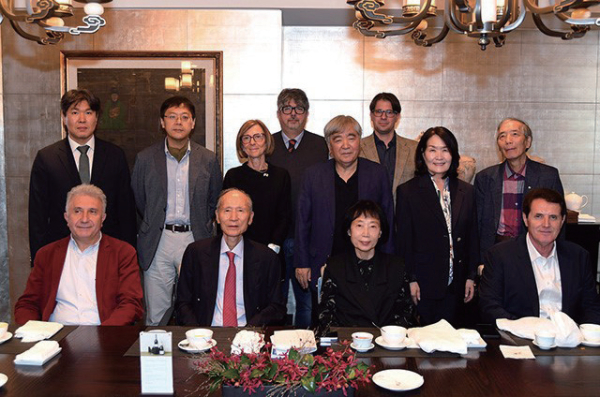
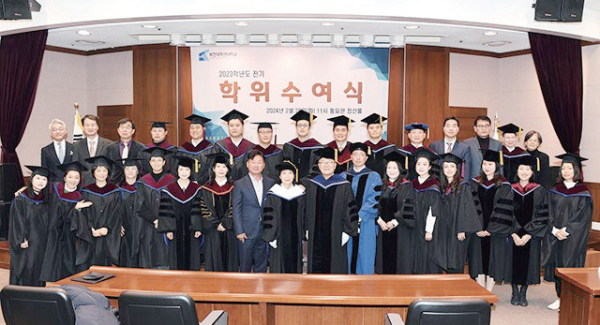
The University of North Korean Studies was founded based on the belief of Dr. Park Jae Kyu, President of Kyungnam University, that no one is better suited to study North Korea than the Korean people themselves. The institution was established in 1989 as the Department of North Korean Studies within Kyungnam University’s Graduate School of Public Administration. In 1998, it was formally recognized as the North Korea Graduate School, and later, in 2005, it became an independent institution known as the University of North Korean Studies. In 2007, the Simyeon Academy Foundation was established to operate the university.
The University of North Korean Studies is a graduate school specializing in the training of professionals in the fields of North Korean studies and Korean unification, and their related policy research. It is the only institution in Korea dedicated to North Korean studies and consulting, and it is frequently cited by the media as a leading source of expert analysis on North Korea-related issues.
Today, one of our top priorities is expanding academic exchanges in North Korean and unification studies on a global scale. We currently collaborate with 37 research fellows from 10 countries, along with more than 50 scholars conducting specialized studies in their respective regions. Our university is committed to raising international awareness of the Korean Peninsula’s division and fostering global interest in reunification. Above all, we take great pride in our extensive and in-depth collection of resources on North Korea and inter-Korean relations, which we believe will play a crucial role in the reunification process.
One of the most unforgettable moments of my life was leading the South Korean delegation at the 2015 reunion event for separated families at Mount Kumgang. There, I witnessed a heartbreaking scene: a 90-year-old mother, who had waited for 70 years to reunite with the son she had left behind in North Korea, finally saw him again. However, because of her dementia, she was unable to recognize him. It was a painful reminder of how the tragedy of division has destroyed individual lives. This experience reinforced my belief that Korea must achieve reunification as soon as possible to ensure that such sorrow is never repeated.
Q5 You received a plaque of recognition at the 2024 Red Cross Gala. Could you tell us about it?
During my husband’s tenure as Minister of Unification, I became involved with the Korean Red Cross as an ex officio member of its advisory committee. Since then, I have dedicated over 20 years to Red Cross volunteer work. This experience has broadened my perspective on public service and deepened my understanding of various social issues.
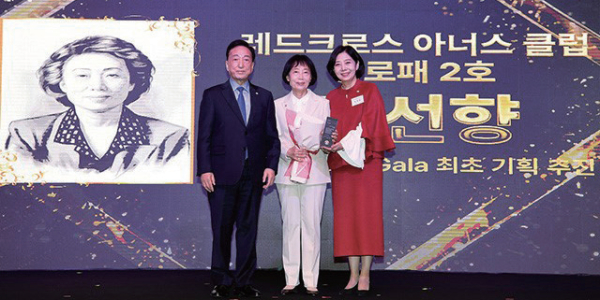
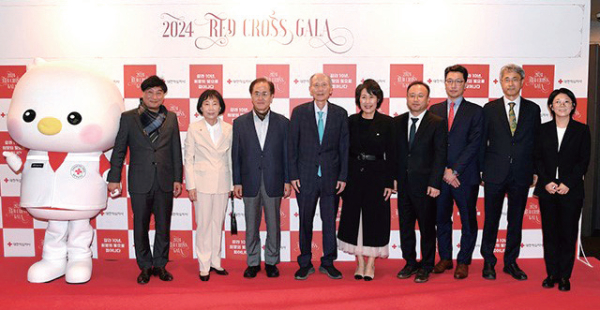
The Red Cross Gala is an annual year-end charity fundraising event hosted by the Korean Red Cross. Last year’s gala was held under the theme “10 Years of the Gala: Blossoming into the Light of Hope” and was aimed at supporting young caregivers in the pursuit of their dreams and aspirations. I was honored to receive a plaque of recognition for my role in initiating and organizing the first Red Cross Gala.
When the inaugural Red Cross Gala was held in 2015, I was serving as Vice President of the Korean Red Cross. At the time, I sought to shift the donation culture from being primarily corporate-driven to a more inclusive and widespread movement. As a result, the first Red Cross Gala exceeded its fundraising goal and was a great success. Building on that momentum, the Red Cross Honors Club was established in September 2016 as an extension of the gala, with the slogan “An Investment for a Better World.”
I was the second founding member of the club and was joined by my husband, Dr. Park Jae Kyu, who became the 51st national member and 157th member of the Gyeongnam chapter. As of November 2024, the Red Cross Honors Club consists of 276 members who have either donated or pledged a contribution of at least 100 million KRW (approximately $75,000) to the Korean Red Cross.
Q6 What is your philosophy of life?
Lately, I often find myself simply wanting to enjoy each day. When I read novels or poetry or watch a movie I’ve been wanting to see, time flies by, and I never feel it was wasted.
I try to create and enjoy as many of those moments as possible. To maintain both physical and mental well-being and to keep energetic, I make walking a regular habit. I strive to keep both my body and mind light, free from unnecessary burdens.
To stay active, I take a walk in the park near my office after lunch and stroll through the city on weekends. Whether working or volunteering, I believe maintaining good physical and mental health is essential to truly enjoying what I do.
Q7 You spend a lot of time with young people. Is there anything you would like to say to them?
I encourage young people to actively contribute to building the foundation for national reunification and peace. Recently, more and more young people seem to have a pessimistic view of reunification. However, reunification is not just an option—it is a necessity and our future. A unified Korea has limitless potential. For both this generation and the next, reunification should not be seen as a burden but as an opportunity. I urge young people to take an interest in this cause and work toward making it a reality. I also hope that young people will seek out and immerse themselves in experiences that truly engage them. Many people later in life regret the things they didn’t do when they were young. The experiences you gain in your youth will become invaluable assets throughout your life. If there is something you have been hesitating to pursue, take action now—so you will have no regrets in the future.